
As a therapist and hypnotist I have a problem with a certain old biker adage. Most motorcyclists have heard it. “There are two types of bikers. Those who have been down and those who are going down.”
Women Riders Now E-Newsletter
Stay up-to-date on all things motorcycle! Latest gear, bikes and products reviews. Travel ideas, great product giveaways, and more.
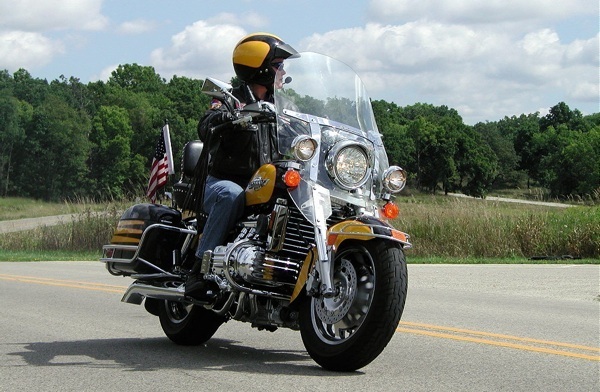
From a psychological perspective this saying is potentially dangerous as it could create what clinicians call a self-fulfilling prophecy. A self-fulfilling prophecy is a mental process whereby an individual subconsciously creates an event due to the minds belief in the inevitability of that event. In hypnotic theory there is a similar mental process called waking hypnosis. Waking hypnotic incidences occur to everyone on a regular basis. For example, if someone said to you, “What happened to your hair?” chances are pretty high you would quickly go to the nearest mirror to check. The reason is because you became hypnotized around the idea that something was different about your hair simply through the power of suggestion.
Waking hypnosis is especially strong when the person giving you the suggestion has some kind of prestige. So, if an experienced rider tells you that you are going to go down, you may be more hypnotized around the suggestion than if a non-rider tells you the same thing. The point is, be careful what you buy into. Dont think of accidents as a right of passage.
Further, that old biker quote fails to qualify what is meant by, “going down.” Consequently, many people will jump to the most catastrophic imagery possible such as a fatal crash. Imagine the self-fulfilling prophecy and hypnotic impact that kind of thought could have.
The Truth
In reality, it is possible for a motorcyclist to never go down. Ask around. Youll be surprised how many motorcyclists have never actually been in an accident. Oh sure, theyve had scary moments, war stories even. But quite a few have never been down in any kind of a serious way. It is also possible for a rider to go down once and never again. Psychologically it is important to keep a careful watch on your belief system. This is the psychological end of risk management on a motorcycle, just as taking a safety course and wearing proper riding gear is part of the behavioral aspect of risk management.
However, motorcycling does clearly carry risks. There are, after all, other activities we motorcyclists could engage in that would be much safer. And unfortunately, there are riders who have been in accidents. A problem not commonly discussed between motorcyclists is the psychological symptoms that can linger long after the physical wounds have healed. Interestingly, men are likely to turn to alcohol or another substance in an attempt to quell their symptoms. While women may do this too, symptoms are more likely to turn inward and become depression.
Recovery Problems
Often, the clinical diagnosis of someone who has had a life-threatening trauma is Post Traumatic Stress Disorder (PTSD). Sometimes, an individual may only have some features of PTSD but not enough to warrant the actual diagnosis.
Whether or not an individual has full blown PTSD, common symptoms post-accident survivors will most likely go through can include:
- a loss of self-esteem
- nightmares
- a numb feeling
- avoidance of places, people or situations reminiscent of the accident
- panic symptoms
- depression
- anxiety and fear of motorcycling, and a general questioning of ones ability to be effective in their decisions and abilities.
If you have been in an accident it is best to consult with a mental health professional to determine if you have PTSD or just a few of its symptoms. Lets see how some of these symptoms affected women who have had motorcycle accidents, beginning with the loss of self-esteem.
Case Studies
Vicky Racine of Michigan had a scary accident while riding her motorcycle. She hit a deer. Vickys husband was riding ahead of her. Vicky had been riding her own bike for three years at the time. As a result of the accident, she suffered a lot of bruising and a broken bone in her hand. After the accident, I asked her to gauge her self-esteem on a scale from one to 10 (10 being the highest). “After the accident,” a soft-spoken Vicky began, pausing to take a deep breath, “my self-esteem was about a four. I really questioned if I could have avoided the accident. I really doubted my ability then. Now I’m riding again and my self-esteem is about a seven.”
Laurie Ingstrup of Illinois also had an accident. The incident occurred in a construction zone covered with loose gravel. Laurie was riding her own motorcycle along with her husband and a friend. She incurred a broken collarbone and lots of bruising. Laurie spoke very definitively when remembering her self-esteem on a one to 10 scale. “After the accident I was about a one,” she chuckled. “I didn’t even feel like myself. I had no confidence in anything I did. I’m tall, 5 feet 9 inches, and at that time I went around feeling like I was 4 feet high. I sought therapy for my symptoms and now I’m riding again. My self-esteem is now about a 9.5.”
Self-esteem Problems
The loss of self-esteem is a serious issue. Left unchecked it will likely move into depression. Psychologically, self-esteem is directly related to an individual’s feeling of competence and a sense of having a positive effect in the world. After an accident, it is common for people to loose that sense of personal effectiveness, not just in motorcycling, but with life in general.
Another common symptom after an accident is a feeling of numbness and a tendency to avoid anything connected with riding, especially motorcycles. Laurie recalls, “[My husband and I] have four motorcycles in the garage and after the accident they were nonexistent to me. It was like a black hole in the garage. I wouldn’t even look at them. I didn’t connect with riding at all.”
Symptoms of panic, which include a pounding heart, shortness of breath and tremendous fearfulness are also typical for people who’ve had accidents. Vicky remembers, “After I started riding again I started looking for something to jump out at me. The first time I did see a deer I actually panicked. My heart went up in my throat and I started shaking.”
Fear Levels
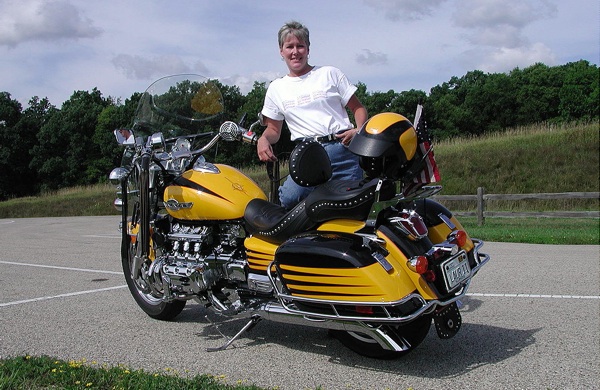
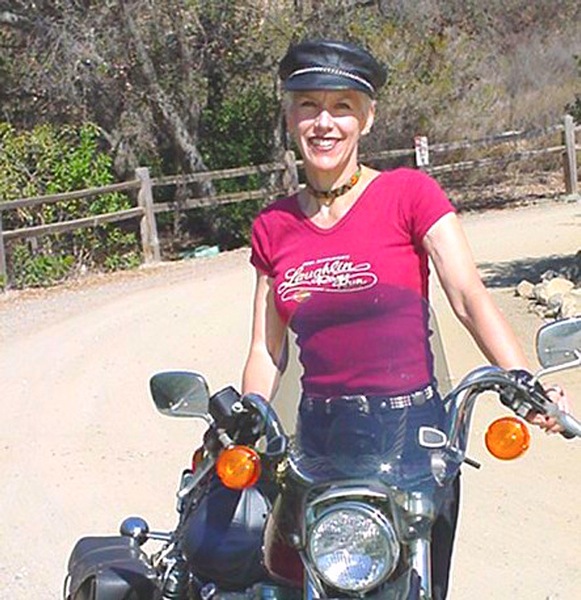
Most motorcyclists do experience some degree of fear while riding, at least some of the time. But after an accident the fear factor can become a true force with which to contend. Etta McQueary of California had a serious accident and and was on life support as a trauma patient and not expected to live. Etta was hit by a four-wheel vehicle on a twisty mountain curve. Etta now speaks publicly about her accident and her decision to ride again.
At the time of her accident Etta had been riding her own motorcycle on the street for about 10 months, though she had had years of experience riding off road in the desert. Etta says, “My fear is not completely gone but I ride anyway. After my accident my self-esteem was about a two. Now it’s about an eight.” When asked about what personality trait Etta believes contributes to her riding again, after a long thoughtful pause, she replied, “Perseverance…and a strong desire to overcome fear.”
Strong Support and Character
Etta also surrounded herself with an adequate support system that helped her to make the decision to ride again. One friend in particular, was very supportive. “I felt safe with him after the accident because I knew I could ride at my own pace.” Vicky also had support from her husband after her accident, “My husband didn’t pressure me. He understood it was my decision.”
Vicky, Laurie and Etta all exhibit the strength of character needed to overcome such trauma. Psychologically, the decision to ride again has been life affirming for these women. Note the high number for self-esteem each woman gave after riding again. Of course, it’s also O.K. to choose not to ride anymore. Among other things, this decision should revolve around how much of the individual’s identity is tied in with being a motorcyclist. If riding is not that important to the person, it’s not unreasonable to give up riding altogether.
Psychologically, though, something, like riding, may be a part of an individual’s identity if it involves some or all of these qualities: that something plays a role in the individual’s social life, married or romantic life, it gives that person a sense of feeling unique or special, it is a coping skill in that it causes pleasure, relaxation or a sense of freedom and, the individual invests time thinking and planning activities around this special something.
Learning from the Past
They say that hindsight is 20-20. So, when asked to think about the day of the accident and what, if anything, these women could have done differently, Vicky replied, “I guess I could have been more aware, instead of just staring at my husbands back. I always ride behind him. Now I’m always very aware of my surroundings.”
Laurie responded, “Since then I’ve learned to ride my own ride. I feel I’m a better rider now because of this.” Etta reasoned that, “On the day of my accident I had just a light breakfast. I know now that my blood sugar was very low. I’m self-sufficient now. Before my accident I used to just carry a little purse with me. Now I have saddlebags and I carry food, water and clothes so I can dress according to the weather changes.” All three women agreed that safety equipment, such as leathers and a helmet, is extremely important to them now.
Needless to say, it was not easy for Vicky, Laurie or Etta to return to riding. Each concurred that taking it slow and not being pressured by others is the best way to proceed. Additionally, having a support person is most helpful. Psychologically, this is sound advice. Gradual exposure is the best way to begin to ride again. If you have been in an accident and want to ride again your “cycle-therapy” prescription is to start by simply reading about motorcycles and looking at pictures. Then move to just sitting on a bike. Set up small goals for yourself and do not proceed to the next until you are comfortable with the last.
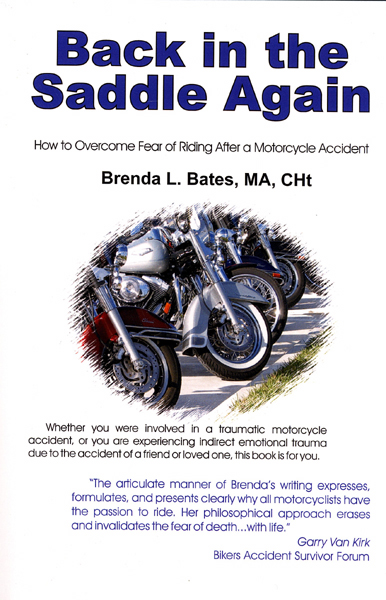
Editor’s Note: Author Brenda Bates wrote a very helpful book, “Back in the Saddle Again.” You can learn more and order it at BikePsych.com.
Related Articles
Riding Right: You Flunked! Now What?
Beginner’s Guide: Common Obstacles and How to Overcome Them

I took the motorcycle course. I felt I did ok during the first day but towards the end I panicked during a stop and grabbed a handful of throttle. I lost control and although I didn’t fall, it scared the heck out of me. Needless to say, all exercises after were horrible. I was afraid and could not shake the fear. The anxiety took over and I dropped the bike at a stop. I have zero confidence and I just don’t know if I will ever get it back. I’m compensating by looking at Can-Am Spyders now because in my mind, it’s safer. I hope I can get this out of my system.
Thank you so much for this article. I just had my first ride on my new-to-me bike after a serious crash my hubby and I were involved in. (The guy went through a red light at a major intersection near where we live.) I was nervous, but feel I did ok. I was way more aware of my surroundings. Safe riding everyone!
My accident was nine months ago. I was stopped behind a young woman turning into a gas station. No turn signals but her wheels were turned in that direction and the only thing in the other direction was a small dirt road with maybe three small homes. I waited, and waited, and finally decided to go around her. Just as I did she pulled a sudden left turn. I knew I was going to hit her. I caught the edge of her bumper. My last thought was, “how can I not end up under my bike?”When I came to, my first words actually were “how is my bike?” which I had always thought to be a myth! The ambulance had already arrived. I thought I was okay and sent them on their way. I was wrong. I had friends come and get me and he drove my bike to their place. As I got out of their truck I started to fall down. I could not stand. They took me to the emergency room and I was then transported to a hospital with a trauma unit. Two full fractures on the right pelvis. Small fractures on the left. A crushed vertebrae and two more chipped and a concussion. It could have been so much worse.As I healed all I could think about was when I could get back on my bike. My bones are fairly healed though arthritis has already crept in. I am no longer able to keep my balance and even look a bit drunk when walking. I hope that it will not be permanent. It has made it dangerous for me to ride and as a result my husband encouraged me to get a Can-Am Spyder.I miss my two wheels. It is very different but the wind is the same. I have to admit it is rather nice not to have to hold her up when I am at a stop. She is surprisingly fun to drive. The best part is my husband worries less about me now. By the way he does not ride a bike nor has he ever but he has been fully supportive of me getting my own which I did just three years ago. I am now 60.One final thing. I have a new motto; When in doubt, wait it out! Yes, I am finally learning patience.
November 2015 laid my bike down. Had my grandson on; scared the crap out of me. Was more concerned for him than myself. Damaged bike $4200. Haven’t been on a bike since. Grandson had helmet on. I didn’t. I’ve always told my kids to get back up once you’ve fallen. And I’m leery.
Ken,Be sure to read this article with comments from our readers providing some words of encouragement.
After six months of riding on my Honda Rebel 250, I got a brand new Triumph America LT. I love it and feel good on it. On my first longish ride out with my husband we were stopped at a light. We “stagger” when riding and never ride right next to one another. The light turned green, he went and I waited a split second for my place. Before I could even hit the throttle, the woman behind me sideswiped me. Broken bones in my leg, ankle, and foot and cosmetic damage to my brand-new-less-than-100-miles-on-him-motorcycle. Not even close to what the ladies in the article experienced. That day I wanted nothing more than to get back on Blue and start riding again. Now, a few weeks later, I get so nervous thinking about riding and being in traffic. The more I think about it, the more scared I get. “Is my bike too big?” “Can I get away from another car?” “Maybe I shouldn’t ride anymore.” I don’t understand why I am more scared now than right after it happened. I can’t think of anything I could’ve done except not been there. I have a great riding support system, but I feel myself withdrawing. I don’t want to be scared. I’m usually so strong and independent.
Thanks for sharing Karen. These days we need eyes in the back of our head when riding. I too often feel the same way when I get on my motorcycle despite not having an accident like yours. How can I protect myself from the jerks not paying attention? I often say it’s a war zone out there for we motorcyclists.I’m no psychologist, but I would say to start moving past that fear is to start out riding in areas with less traffic if you can. And if you’re in a situation like the one where you had the accident, do all you can to make eye contact with the driver behind you so he or she knows you are there. And continually monitor the situation behind you through your rear view mirror.As someone who has ridden for more than 25 years now, I’ve recently adopted that rear view defensive tactic after hearing about more and more riders get plowed down from the rear. In the end it is right place, right time or wrong place, wrong time kind of thing. I say a major prayer each time before I ride. And I make sure I am feeling super sharp when I ride. I am going to put your question out to our readers in our Your questions answered section. So check that section in a bit and you’ll get to see the responses coming in from our readers. Collectively, they may give you the inspiration you need to move in the right direction.
I learned to ride at age 54, after riding with my husband for a couple of years. My first bike was a Kawasaki Vulcan 500 but was always just a little scared on her. After a year of trying to “get it” I got myself into a situation and got thrown. No real damage to myself, other than ego, or to the bike, thank goodness. As it was October, the riding season was pretty much over for me. As soon as it warmed up again, I insisted my husband take me for a ride even though I didn’t have the best gear for the wind chill. I was rigid on the back of the bike, absolutely stiff! But I knew I had to face it, and by the time we got back to the house (short ride, but I was so cold by then) I started to relax and enjoy it. We went and got me a Kawasaki Eliminator 125. (You know your husband loves you when he, at 6 feet 2 inches, will ride your little bike to the shop for inspection). I had a great time learning on my little machine. I’m happy to say I’m back on my 500 and am dreaming of a bigger machine to take longer trips.
Thanks for sharing Annette. Great story of “recovery.”
As a fairly new rider, I had my first accident two years ago on a July 4th ride when another biker clipped the back tire of another rider. This caused that biker to go down as well as the three of us behind him. I remember coming up off my bike and ending up next to her (my bike) in a ditch. Thank God, nothing was broken, just two bruised knees. Long story short, I got on my bike and rode about another hour to get home. Yes, I have been a bit nervous about riding since then but I’m not ready to give it up just yet. God is good!
July 4, 2015 will make one year since my accident. I had only been riding a few months on my own. I also had taken a riders course, but I had ridden as a passenger for several years with my husband. We were in Arkansas riding the pig trails. My husband was in front of me; we were approaching a hairpin curve that was not marked. As I approached the U I thought I saw my husband’s foot on the ground and his back tire across the white line. There was gravel in the road were he was at in the U. At my point I did not feel I could brake enough to stop and I would not have been able to go in front of him without T-boning him so I chose to go behind him off the road. About 10 feet or so off the road it was a drop off of about 10 to 15 feet. I totaled my bike ended up being air lifted to a hospital where I had eight broke ribs, four broke twice, my back was broke in two spots. I had a ruptured spleen a fractured hip and a broke arm. As I lay in the ICU I told my husband one day we would be back to finish this ride! He felt terrible like it was his fault for me being such a new rider. I feel like it was a judgment call, nothing other then that! I plan to ride again. We were a couple hundred miles from home. I stayed in ICU for about three days, within a weeks time we were on our way back home with all the medical instruments, back brace, sling for arm. Once I got home I was back at work (desk job) within two weeks. My doctor asked me not to ride again until at least March 2015. I have ridden with hubby a few time since. I have no fear of riding, no PTSD.People think I have a screw loose, but I think I am fine. I love riding — the freedom, the power between my legs! Last week, I purchased a 2015 Fat Boy Lo. I love it! I never had a fear of dying, never had my life flash before my eyes, none of the things people often say they may have. Maybe I do have a screw loose?I have overhead people (friends) who ride also say things like is she crazy, she just wrecked not even a year ago. I do not know why they have to be so shocked that I wanted to ride again. I thought maybe because I am a woman, I wonder if it was a male if they would say the same things? During the time in the hospital I would not let my husband call home and tell my family, mainly my boys (24, 27 and 28 yr old). It wasn’t until Sunday night after the 4th of July that I let him tell them. I did not want to ruin there holiday. People may be shocked not sure why, even my sons, my youngest when we told them I had purchased another bike, their words were good, she deserves it!God never grants us tomorrow. Life is too short not to do the things that make you happy! I truly am happy riding!
Alisa,Thanks for sharing your incredible story with us. Glad to hear you’re back on the bike.
In 1987 I got hit from behind on a highway, which caused me to strike the curb and break my left knee. Took me about a year to be able to get enough strength in my leg to hold up my bike. I have ridden more than 500,000 miles since then on motorcycles. Since then I have been hit twice, once by an idiot that was road raging with the bikes at a stop light and once by a lady who pulled into a carpool lane from a dead stop right in front of me. Even with my level of experience looking back there is nothing that I could do differently. Being stopped with no where to go and being hit. Seeing a car about to pull out and hitting my brakes but unable to avoid a collision. We chose to ride, and know the risks. You have to be cautious on a bike, but I am not sure about calling this PTSD.
I have a Heavy Kawasaki Concours 1000 and I dropped it twice already. First time was just trying to back it out of a muddy driveway, (even my husband dropped it the day before) but I have learned already of this feeling of not wanting to ride. I just dropped it yesterday, only a few scratches, but I was out riding and my esteem took a beating too. I have only been riding for a week or two tops and picked a heavy bike to start on, and felt foolish for doing so. I haven’t gotten on it again as it happened yesterday, but my husband just took off on it. I was about to get on the back and just said no, and came to this website. I am going to have to face the fear, but I really think that I just want to ride alone, and don’t want him riding me around because I want to be responsible for myself and he for himself. We are getting him his own bike again soon as he had a Harley and rode for 20 years then had a very bad highway accident and broke his neck, but he’s all better now, loves it and will never stop. It does seem to get into your blood because I am addicted to riding my motorcycle now. I would say that certain medications that hinder your judgment of weight could really put you at risk on this bike, so I now won’t ride until my injuries are healed and I am not on any pain medication. I hope Simon gets back on a bike, from Australia. Your story made me jump on and say what’s happening with me. The bike has been dropped three times already, but we are going to keep riding.
I was hit by a car nine months ago. Nothing was broken, thank goodness, but with the concussion and soft tissue injuries to both legs, it was six months of rehab before I was able to physically get back on my bike (’04 Harley-Davidson Road King.) That said, I was still not mentally ready to start riding on my own again. I took it slow, and thanks to the understanding of my long time riding partner, was able to begin riding again. I started out riding behind him, first on short rides, then increasing in distance until we were out on full day trips. This was not easy. I had other well-meaning friends who kept telling me that I needed to get back on my own bike ASAP or I might never ride my own again. However, those closest to me told me to take my time, that I needed to do whatever was comfortable for me. They were right. After a couple months riding as a passenger I felt ready to get back on my own bike again.I have been riding on my own now for a couple of months. There are times when I feel a sense of panic when a car or another motorcycle gets to close, and there have been instances where I have had to pull off the road and take a few minutes to calm down. I have every confidence that this will pass with time, the more I ride the more confident I feel in my abilities to do so. Ride your own ride is the best advice I was given once I got back on my bike again, and it is so true. Never again will I ride to someone else’s abilities, my safety is more important to me than keeping up with anyone else around me. I also never go out on my bike with the mindset that I am in a hurry to get somewhere, if that is the case I will take the car.Be bold, but ride your own ride ladies. Every one of you is an inspiration to me and every other aspiring woman rider out there.
I am trying very hard to get on a bike again. Five years ago I was in a “pure accident.” A group of us rode out for the first time after spring and taking it easy on quiet country roads so we could chill and cruise. Wearing new riding glasses, I looked behind me and looked forward. My vision swam and I nearly threw up in my helmet. By the time my head was clear, I was headed for a 25 mph bend at 50 mph. The only thing I could do was to lay it over and push it away. Sadly the bike hit metal guard rail and came straight back at me, between my legs, breaking my Yamaha FZ1000 in half on my pubic bone. Tendons ripped from my shoulder and lots of organ bruising and back injuries. Operations and lots of rehab.I have been out for short rides on a 500 and every time I feel my balance shift, even when getting on the bike, I feel the same falling sensation and unbelievably strong fear.Presently I have purchased a Triumph T100 and because I’ve put down the loss of feeling in my left leg I am going to attach a sidecar so that I can hopefully ride with my husband or at very worst go in the sidecar and still enjoy the ride.If you have any gems of insight for me, please share them.
Thanks so much for this article. As I read this article, I see so many signs and symptoms of the traumatic after effects of a crash. Two years have gone by since I ran off the road for no apparent reason, head on into a tree, suffering some serious injuries. Hopefully I am fully recovered now. I have not ridden on my own since my accident, but have been on the back a few times. I took a giant step and rode (back seat) on a long weekend trip (700-plus miles). I rode with my former riding partner, who was ready to ditch me after the first 50 miles as I was in a state of panic the whole trip unless my feet were on the ground. I was constantly tapping his shoulder saying, “Can you slow down? Do you see that car?…etc.” Thank goodness he was patient with me. I am now considering buying my own again, and having a lot of different feelings. This article, and a lot of the comments posted have shed some new light. I know in my heart that I can ride. My question is, how many of you still have anxiety when you get on your bike? Did you start off with short distances or just get on and ride 100 miles? Thank for all the support here!
This is a great piece! I, too, have been down. I was seriously injured. However, I do not remember the actual wreck. I was told what happened. Until I read this article, I did not understand some of the feelings I went through. This shed a whole lot of light on what was going on! All I knew, at the time, was I wanted to get back on the bike but was scared s#!tless. Thankfully, my husband was very patient and pushy with me. He pushed just far enough to make me want riding bad enough to swallow my fear and get back behind the handlebars. I’ve been riding for four wind-in-my-face years now. Don’t let a few broken bones and some road rash keep you from that buggy grin we all love.
I appreciate hearing everybody’s struggles with overcoming fear after an accident. I had my first nasty spill (hit gravel in a curve and slammed into a guardrail at about 60 mph). I was back up on a bike in a year and a half and had no problems at all getting back on. However, in hindsight I should have taken a racing course and stuck to the track for the high speed stuff because in 2010 I had another bad spill and shattered my distal femur, pelvis/acetabulum as well as my left ulna. I have spent the last three years having one surgery after another that left me in a hospital bed and wheelchair for several months. Riding is important to me, and is a great passion of mine and just could not give it up (by the way, I always ride in full one piece leathers, back protector, motorcycle boots, gloves and helmet, all of high quality). What has had the most impact on my fear this time around is that I do not have the support of family at all. My decision to ride has somewhat torn us apart. I am sticking to the track and taking a racing school in a few days but my family just won’t budge and have been told that if I get hurt again “I am on my own.” I can deal with the physical pain, but the emotional pain is something different and is what gets me depressed. I want to be fully happy about my decision but without the support of family that is difficult. I did tell them I don’t need them to understand why I want to continue to ride, I just need them to love me. Reading all your stories I don’t feel so alone. Thank you.
I was riding my bike eight months ago and my husband was riding ahead of me. I saw a deer running full speed through a field to my husband’s right. I knew they were on a collision course and I thought for sure I was going to watch my husband be killed or hurt badly. The deer tried to jump over my husband, but she only made it part of the way over and lost momentum. This sent her back to the ground and rolling. Of course, she was rolling right back to me. I knew I didn’t want to hit her head-on so I dumped the bike on the left side. The bike hit the deer and went to one ditch, while the deer went to the opposite ditch. I rolled over and over straight down the road. I was life flighted to the nearest trauma hospital with six broken ribs, a collapsed lung, a broken shoulder blade, a broken thumb, and road rash from head to knees. Everyone is telling me to get back on my bike. But I have some apprehension, mainly because I am still in pain from the rib and lung injuries. I hope some day that I will be able to get back in the saddle and get the memory of the accident out of my head.
Thanks so much for this article. I just had my second accident (had one 1 year ago). It was the SAME issue. A simple left hand turn that I do every day! The week earlier I had been on a pack ride with 60 bikes inn the mountains, partly rain…twisties and gravel – you name it. Then I am making a simple left hand turn one block from home and I just lost it – can’t yet remember what quite went wrong. I was pretty bruised but no broken bones and my bike is OK except the windshield. It was very scary, I hit a tree and I couldn’t breathe – thought I punctured a lung. I know now that I hadn’t dealt with the first accident and really worked on getting comfortable with turns/ I thought I had but now that I think about it I was still getting palpitations occasionally on turns and would get these “yuck” feelings in my gut. And both times I was alone and without someone in front of me. I have ordered Ride Like a Pro video and plan to do a lot or practicing and working through this. It is so scary. I’m an old rider and I know I won’t heal as quickly anymore but I love riding and need to do whatever is necessary to become a better rider.Thanks for your website and shares! Sue
I discovered this site which has been a relief because I can see that there is hope. I have been riding for 20 years and last Wednesday was hit by a car which destroyed my new BMW 1000RR. I keep running over what happened but I can’t remember in any detail. I suffered concussion and a badly bruised leg and back. Bike is a write off. I have done a number of advanced courses and many track days and races, so I thought I could ride well. Then unbelievably, the dealer who is a friend, suggested I get back on a bike for a short ride to get my confidence back. Not more than 500 metres from the dealership on cold new tyres traveling very cautiously I accelerated out of a corner at slow speed and the rear tyre just instantly let go and next thing the bike just spins down the road with me underneath it. I am at a total loss to understand how I can have two bike crashes in four days. My friend with me said the loss of traction was instant. However mentally I feel very depressed and tearful. I just cannot reconcile how this has happened again. My body is so sore and I am covered in bruises. Thankfully I was riding with a proper jacket; legs and back took a beating though. It’s the metal loss of confidence I have lost. I just feel like giving up, however I love riding and really want to try to and recover from this.
Simon,So sorry to hear of the odd turn of events in your life. Two crashes in four days is crazy! We will keep you in our prayers here a WRN for a speedy recovery both physically and mentally.
On a Sunday morning ride with friends when I have sudden vague recollection of asking “What happened?” I only have bits and pieces of memories of the rest of that day, like EMTs cutting off brand new armor jacket and putting brace around my neck. I broke clavicle, fractured seven ribs, collapsed a lung, had bleeding on the brain, but worst of all, I compressed three cervical vertebrae. That was eight months ago, and am still heavily reliant on pain meds and PT, but getting better and getting around well. Could have very easily been a lot worse. Am still buying, fixing up and selling bikes, but cannot ride again….yet, which presents a dilemma- I really miss riding, but 1. family is going to have a big problem if I start talking like I want to get back in, and 2. the cause of the wreck is still a mystery. Those behind me said I never lifted, never braked, just drifted across the road after a turn and pitched over the bars face first when the bike stopped in the ditch. I have a ways to go before I will have to confront the issue, but I really, really miss riding. Not a woman, but I found this site searching for info and answers regarding those who have wrecked and returned.
Thanks for the great article. Let me start by saying, that, thankfully, I haven’t crashed. I am still recovering from watching my loved one crash right in front of me, some 10 weeks ago, thankfully, with only a fractured pelvis and a couple of bad sprains but alive. I still am struggling with “flashes” of the accident. It’s always surprising to me when it just pops into my consciousness.I made the point of riding just three days after the accident (in between my nursing/doctor duties for my partner). I figured if I plan to ride for the rest of my life, because I love it so much I better get my ass back in the saddle! I’m glad I did that. I still struggle a bit when I ride passed the accident site and what I’ve realized, it’s not the accident itself, it’s the “What ifs” that are paralyzing. Any suggestions?
After watching the movie “The Bucket List,” I decided to work on my own list. Learning to ride a motorcycle was definitely on my list. My inspiration was my husband who decided to get back into riding after 19 years. I lasted about three months as a passenger when I said I need to learn and cross this one off my bucket list. I started with a 250 Honda Rebel and then graduated to a 250 Ninja in about a year’s time. Learning to ride in my neck of the woods was not an easy task. There are no leveled streets – all are hills, upward and downward. The stop signs were the hardest for me. Always seemed to topple over on the hills, especially those with gravel underneath my wheels. My husband was usually a ball of nerves but always had words of encouragement. Finally, I got a 1200 HD Low Sportster, what a beauty! My husband rode it home as I followed in my car. I just looked through the mirror, partly excited and part nervous. At 5 feet, what were we thinking? Though my feet go flat on the ground, the weight of the bike took some getting used to. We’ve made several trips up and down the Bear Mountain in New York. One day, while coming down a steep windy road, I pressed the front brake while on the curve. Needles to say, I took quite a spill, down and across the road in front of oncoming traffic. Lucky for me, I was geared up and well protected. I held onto the handlebars as I slid across the road and somehow managed to hit the kill switch. I also managed to keep my head tucked in and off the pavement. I held on to the bike and put new meaning to the phrase, “Ride to slide.” My arms and both knees and legs were heavily bruised and scratched. My husband, who was following just behind me, was quickly by my side. My first instinct was to get out off the road. By the time a state trooper approached me, I was already standing and off the road. The trooper kept asking me if I was OK. He seemed shocked that I was actually standing. I was afraid to take off my jacket or to look at any of the bruises. I was standing, and I was thankful that my Lil Angels were watching over me. I knew what I did wrong. I knew I was going down the curve too fast and that I should not have pressed the front brakes. It was quite a lesson to learn. My husband straightened out the bike and made sure it was functioning, but his main concern was me not the bike. Thankfully, the crash bars and saddlebags got the brunt of the scratches. My husband looked at me and said, “I watched you slide and thought I lost you forever.” I said, “Not yet buddy – let’s go home.” So, I got back on my bike and rode home. I did not want to think of the pain I was in. I knew there were no broken bones – I just wanted to get home and clean up. I’m still riding, but before going on the road, I went back to the parking lot to hone on some skills. I refuse to quit riding but know how important it is to practice, practice, and practice. With my husband’s support, I know that I will someday, “Ride like a Pro.” So never give up on your dreams but always know that you are more valuable than any bike and never let anyone tell you otherwise.
Thanks for sharing your story and mentioning “Ride Like A Pro.” For those not familiar, it is a very informative instructional DVD that teaches a lot of things you won’t learn in the MSF class. I highly recommend it. You can order it on this Web site at RideLikeAPro.com.
I just met you today at Brandon HD garage party. You told me about this article and it was talking to me. I hate discussing the accident but as I told a new rider today, listen to your little voices. I wish I had turned right instead of trying to cross a very bad highway. This article and other comments are inspiring. Tomorrow I am taking Charlotte out for a ride. I named my Road King after my little granddaughter. She loves to say again, again and again with gleeful joy. I am going to get back on again, again and again! Thank you for today.
I am a new rider. I also took the MSF course. I struggled through it but I passed. I have my license and I have practiced in parking lots and I have now ridden on the streets about eight times. I put on about 500 miles.I did long rides. I live in a rural area and did canyons and some town with a lot of traffic. I was surprised I was not nervous much.
I also conquered by big hill of a drive way and I was riding with more confidence then ever! I was getting there where I wanted to be and knew I needed a lot of seat time for experience. I am 55 years old and I want to live but I want to ride! This has been a dream of mine since I was a teen.
I have always loved motorcycles. I have rode on the back but never my own. Well last week all my confidence went down the drain!
My bpyfrioend put drag bars on my 883 Sporty. He went out to test it and he told me the throttle stuck a couple of times but he said try it! Hit the kill switch if it sticks. Something told me not to do it, but honestly,my boyfriend's personality is so domineering. I didn't want to let him down. He had been the one to build my confidence up by working with me.
Against my better judgement, I rode. I was really pleased the drag bars handled well. I rode through the neighborhood well and as I was coming back to the house I put it in second to slow to turn the corner and made the mistake of putting a little throttle on and it stuck! He yelled at me at the top of his lungs to slow down, “What the F–k are you doing?!”
I came to the culdesac and I braked to slow it for my turn and let go of the brakes and the throttle took it around at about 30 and I crashed on my third try trying to get around it. I hurt my shoulder, bruised my ribs on the top left and rash on my hands. I was lucky. I did not have any gear on because I was just riding around a couple of blocks. This I know was a bad bad choice. Gear and throttle sticking and me being so new. All confidence is now down the drain that I had built up.
My boyfriend screamed at me, berated me all day.Told me you never drop your bike NEVER! You have no respect for that bike.Your instincts! Where were your instincts! You brake hit the kill switch put your f–kin-g feet down! You can be taught but you can't be taught instincts. You might as well sell that Harley. I'm worried about you now. You are going to die!”
I broke the gear shift; I broke my mirror; back single lights. He just brow beat me all day. He is fixing my bike but he now wants me to ride the freeway to a run. I am scared and afraid to admit it. I am more afraid because he said I have no natural instinct and that new or not, people do not drop their bikes.
What scares me is, he said it doesn't matter if your new,your instincts should of kicked in and they didnt! Your going to die. Please what do you think of this? How should I approch this situation. I want to ride bad, but maybe I am not meant to?
You REALLY want my advice Pam? I'm sure I'm not alone when I say, get rid of the boyfriend, not the bike. He has no idea what he's talking about. You are the priority in a crash, not the bike. You need to protect yourself, not the bike. Your instinct is to protect yourself. You did the right thing. Enough said.
The problem was in a faulty bike, not a faulty rider. You are doing everything you should be doing, except you have a boyfriend who wants to build a bike for himself to stroke his ego, not a safe bike for his girlfriend.
Get rid of the boyfriend who only berates you, does not lift you up.
Life is short. Why be with a jerk? I can't stand men who berate and belittle women. Get smart and dump him and start living your dream on YOUR terms.
I bought a bike and it fell over. I could not pick it up. Gas was coming from the gas cap and pouring down my bike. I freaked out. None the less I picked up the bike after my third try. I am short — 5 feet 2 inches. I did not know the bike weighed 760 pounds. I am now looking for a smaller bike. It was a lesson I had to learn. I am still afraid of the bike and I will not ride it unless someone is here with me. So I guess you could say I am still afraid. I am a 7 on the scale. How do I overcome my fear? It would be easier for me to ride in a parking lot because my yard is to bumpy with a lot of holes.
Thanks for the article! You really gave me something to think about.
As a new rider who took the MSF two years ago and was flirting with riding my own and not being a passenger, I tried a lot of bikes with trikes at the top of the list. Even though I successfully completed my class and passed both the written and practical exams, I knew I needed lots more practice time before I could or should ride the roads around my home. While waiting in line for one of the activities during the class, the school's bike rotated out from under me and fell to the ground. Since that time, that is my main fear and repeating thought- the bike sliding out from under me even though I know intellectually that a bike moving forward wants to keep moving forward and won't slip out from underneath me while rolling (well, unless I hit something or something hit me). I thought a trike might be the answer to my nervousness.
As I was shopping, I tried a Shadow 750 that had an Insta-Trike kit on it and realized some of my issues was that the bikes I tried to this point didn't fit…trike or not. As soon as I sat on this bike, I realized this was a good fit. I was able to flatfoot sitting and standing while straddling. The footpegs were at a great position and distance and the handlebar grips were at the right location for my length of arm. I passed on that bike, but I recently bought a Shadow 750 after sitting on a stock version. The low center of gravity helps me feel more in control, but still nervous about the whole thing. No trike kit yet- I want to CHOOSE to trike instead of HAVE to trike.
My everlovin' husband rode my new bike to parking lot after parking lot, day after day as I followed him in our truck. We would park, I would gear up and ride circle after circle, stop, go, turn, shift. After practicing day after day, I was still nervous and constantly thought about the worst case scenario thinking that would help me plan and keep me safe. A good friend's husband told me the “'there are two kinds of bikers” story as well. Hmmmm… I am thinking this didn't help too much… I graduated from riding the parking lots to riding the roads but was still nervous as I rode (will it tip over- slide sideways?)- not a good situation and not fun!
What I now think after reading this article that in anticipating the worst, I was stripping the fun from my rides and was causing my own distress by imagining a self-fulfilling prophecy. My new goal is to now work on my mindset as I ride and trust the skills I have and continue to build as well as the bike I ride. I am looking forward to really enjoying riding with my husband as a rider in control of her bike and her mind.
Thanks again!
I had a mishap with an elderly lady who turned left in front of me and then stopped when her passenger said “watch out for the motorcycle.” It took me a minute to get up and when I did I was a cussing, “Look what you did to my bike! “Why in the hell did you stop!”
I didn't realize how hurt I was from the shock I was in. At the time I couldn't believe what had just happened. It was like a dream! Messed up my bottom left side and my right arm. It's been four weeks. Still sitting in this darn chair and going through therapy. But I got to tell you, when I hear a bike go by, I get more upset that I'm going to miss this summer riding.
I know that I'm getting back on, but from reading these articles I'm going to go a little slower then I've been planning. I'm going to take a few rounds on the back of the hubby's bike first. The last thing I want to do is not be on a bike. I'd rather take it slow and know that I'm going to be back in the saddle again! Thanks for the articles they help.
I went down in the rain that was turning to hail as I tried to slow down on a smooth surface from a speed of 65 mph. My husband was in front of me coming off a freeway and I didn't know he was going to stop under the overpass, it was our exit so I thought he was exiting. When I realized he was stopped I used both breaks and the bike slid from under me, it went to the left, I felt my foot push away from it and I hit the ground. Two things went through my mind, under no circumstance was I going to hit my husband and I thought of death but it did not seem to bother me.
I got back on the bike 30 minutes later when the storm let up, the rain accumulation was probably 5 inches high and our bikes were sitting in it. I got on the bike and we rode slowly back to our hotel.
The next morning I was sore but I got back on the bike again, rode the service road until I could get a grip on the ride and then jumped on the freeway again. The third day I was very very sore but I got back on the bike for the three-hour ride home. When I was on the bike I felt no pain it was only when I got off the bike that I felt the pain.
My husband kept insisting that we call our son to come ride my bike home but I just couldn't let someone else ride my bike, I was just not going to be afraid.
Six weeks later I'm still sore and found out that the fall had bruised a bone on my leg that will require time to heal but I have not stopped riding since the accident. I love my bike and my ride.
Great article! I put my bike down 10/2008 when an oncoming car came into my lane on a sharp curve. I swerved to avoid him and ended up in a ditch. To my fortune, I wasn't badly hurt (broken arm). When it came time to ride again after I was healed and my bike was repaired, I must say, that first ride back on two wheels, was a little scary. I loved to ride and couldn't imagine not riding again. I put in my mind that it wasn't the bike's fault, and got back on it. I'm not saying that there weren't huge hummingbirds in my stomach when I twisted the throttle that first time back, but the wind on my face and the feel of the road made it a lot easier to keep riding.
Thank you for this insightful article. As I emailed you a year ago on a personal issue regarding my own near death trauma/accident the article came at the perfect time. On May 14, 2008, I was hit by a hit and run driver who ran a red light at 50mph. After life flight to a trauma center with a severe head injury and shoulder fractures, I was in the hospital for two months and outpatient surgeries and rehab for six. Now, one year later, I signed up with my husband for the MSF advanced motorcycle course. Shaking and tense the entire eight hours, I was able to pass the course and gain back some confidence. Ride on and stay strong. It sure is a journey.
This article is just what I needed today. I have my own bike, took a rider safety course four years ago, but only have a few hours “neighborhood” experience. I dropped my bike last year and was “scolded” by my husband for not reacting “properly” and have been afraid to get back on and make a mistake. he beginning paragraphs of this article brought to life how my fear is self-inflicted. As FDR said, “The only thing we have to fear is fear itself.” Thanks, and I am off to put on my leathers and helmet!
This was a great article! As a new rider, I had a small mishap that made me lose my confidence too. It is tough to overcome. My heart would start racing just from the sound of my bike starting up. I finally decided to take the Motorcycle Safety Course again to build my confidence. I did fine in the class and have been riding again for about a month. Everyone told me I didn't need the class again, but it was my security blanket and I'm glad I did it.
I truly love riding and I'm glad I gave it another shot and didn't throw in the towel. his article even gives me more confidence! Thanks!
This is a wonderful article. It made me think of my first cross country ride where I hit some loose gravel on a curve and went down. I was not hurt, thank God for my protective clothing, but I remember the rest of the ride was very trying for me. It took a while for me to regain my confidence.
This is a great article. After my accident last year, I sought help on this Web site to get my confidence back but was told (with good reason) that crash stories weren't welcome. But it's an acknowledged fact that accidents happen and anyone who has been down, and I firmly believe not everyone will go down, understands the need for confidence building from those who have been there and succeeded on their second try. After my two-month recovery period, it was too late to ride (an excuse because I was afraid), but I'm back out there this year and loving every moment! Encouragement is what we all need sometimes, thanks for the article.
Wow, I have been looking for something like this. I too suffered a bad accident after riding for nearly 15 years. It was a hit-n-run though. Six months to get back in saddle. I am still not logging the 5,000/year like before but this article helped me understand the “hee-bee-gee-bees” I have been struggling with. I just need to get back in the saddle! You don't shoot horse when you get thrown, right?
Good article with many new things to think about and keep in mind. I, too, think that the psychological perspective of “dropping the bike” sometimes is more scary than actually doing it. After all, this is a heavy machine and you add bigger machines (cars, trucks, etc) to the picture and it can be terrifying! I have dropped my bike several times, once in a parking lot and we both just kinda fell over, two or three times on that dirt road I live on, but never on the highway or in heavy traffic. My day may come, but I try to avoid the thought. I hope that all that parking lot practice I did and still do will pay off to keep me out of trouble.
Brenda Bates makes a lot of good points in her article. The reference to PTSD how to recover from a traumatic incident is about as real as it gets, and something for every rider who is involved in an accident to face head on. Too many riders go into a stage of denial brought on by another kind of fear — worrying that other riders and friends will see some sort of weakness if there is any kind of hesitation to get back on a motorcycle and ride again.
Having hit a deer in 2003 that left me with most of the right side of my body broken and twisted, I have experienced all that Brenda Bates writes about in this most excellent article. From the extreme pain to the helicopter ride, from the trauma center to a hospital and eventually to a rehab center, and from multiple surgeries over the last six years and the countless hours, days and weeks of physical therapy, I am now able to look back on most of it like it was a bad dream.
The one thing that always clears my head and helps me deal with the aches, pains, and physical handicaps that the accident left me with, is — (if you ride, you know what I am going to say) — getting back on one of my motorcycles and going for a ride.
While I am able to ride for limited distances, I fully understand when others who have been in accidents choose not to ride again. Each person will handle a traumatic event in their own individual way. Some will use it as motivation to get back on and ride again, others will rearrange life's priorities and go down a different path.
While attitude is everything in dealing with the post-accident thought process, one should never underestimate how much the support of friends, family and fellow riders plays into the process. I am glad to see that the riders Brenda mentioned in her article had the same level of support that I did following my meeting with Bambi.
Another great article from WRN. Having already had an experience of doing a low side slide across a highway on my bike, I'll have to say I was more angry than frightened. The adrenaline was flowing which must be the reason I could pick up the Honda Shadow off the ground and not by using the butt technique! The bike and I weren't damaged enough to not keep going so I climbed back aboard. I knew if I didn't, I might not get over it. I had to prove to myself I could push that machine around. It wasn't going to be boss. My husband is the one who wasn't so sure he wanted me riding again as he saw my accident in his mirrors. It took a lot of calm talking after the incident to discuss it and walk though it together and hopefully learn from it.
I can tell you I LOVE, LOVE, LOVE my full face helmet. My head bounced off the pavement and without it I can guarantee you the husband would be feeding me applesauce. I have better confidence in my equipment since I went down. Keep the info coming. This has been my main site to view since I learned to ride.
Thank you!
The most important part of this article was buried in the last section: Learning from the Past.
Whenever a person has an “incident,” whether the bike goes down or not, it should be viewed as an opportunity to review what went wrong and how one could have reacted differently.
Personally, I don't think self-esteem has an iota of importance as to whether one gets back on a bike or not. It's whether one can learn from what happened and apply it to future rides. Even the women interviewed for this article said so.
This is a very serious issue, not addressed in any “Rider Safety” courses, rider magazines or other popular biker publications. A lot more needs to be done to bring this out into the open. I ride alone most of the time now. I really believe that it's not because she “doesn't like to ride anymore,” I believe she's not resolved the issues of a minor encounter with a vehicle years ago. I'm buying the book.
Great article. I so believed that old biker adage, “two types of bikers.” I recently took up riding my own, partly because I was involved in a horrific motorcycle accident when I was young and stupid, involving drinking and driving. I haven't ridden in 27 years. Last year my hubby got a Harley, and I have been a passenger. I have to say, I do love riding, but I have experienced anxiety as a passenger. I don't like not being in control. That is in part why I got my own. If I make a mistake, it is my mistake. I don't sit in the back and wonder, “Does he see that?” etc.
Anyhow, I really believed that I was going to drop my bike, inevitable because they say everyone drops their bike. So when I did, I told my husband, “Well, I got that out of the way!” I keep having fears that I am going to make a big mistake and hurt myself, like it is inevitable. But I have decided, no more, I am doing all I can to be safe, and not to live in fear. I really love riding and well, sometimes living involves risk!
Thanks again.
What a timely article for me. I am getting back in the saddle after years out of it. I rode for years, from age 12 to 21 and only dropped one bike, my Dad's gorgeous rebuild Harley '74. But that's it.
I just qualified for my Florida motorcycle endorsement. During my two-day class, I had an instructor that not only yelled at me, he made me so angry I cried. He told me he would read about me in the paper. He also told me he would fail me, not for my riding ability, but because I got out of line, and once did not understand instructions. I shook it off and passed the ride test with flying colors, and 100 percent on the written, but still it shattered my self confidence. I will be fine. Thanks for the boost.
This article was very timely for me, since I have been riding since 1983 and had my first serious accident two months ago. The worst part was, it was my own fault. I was careless and hit the back wheel of the bike in front of me. But I was wearing all the right clothes, and I survived, albeit with quite a number of slow-healing injuries. Still, I can't wait to ride again, and you better believe I'm going to be paying more attention next time!
Thank you for this article! Having had an accident on my bike (with the scars to prove it), I know how psychologically damaging an accident can be. I had never thought of my experiences as being PTSD but now I see that I had all the symptoms. I am happy to say that I am riding again, and more enthusiastic (and I like to think, smarter) than ever. For me, the fact that I was never going to let fear have that power over me again was the determining factor in my getting back on a bike. But I also know how lucky I was. Again, thank you for addressing this issue and giving “survivors” a forum for understanding what was going on in our heads.
I have always hated that expression – and as I hear some bikers tell of laying the bike down to avoid an accident I want to yell “that IS an accident!” I've ridden horses all my life and there is also a saying “99 falls makes a good rider.” I don't believe that either. In all of my 40 years of riding horses I've never fallen off. Does that also mean that anyone who drives a car one day will have an accident? I know plenty of people (including myself) who have a clean slate.
I don't believe that if you do something long enough it's bound to happen, but I do believe in that old self-fulfilling thing. It is a good idea to think positive and keep the mind clear of negatives. It was very heartening to read this article. Thank you very much!
Very good time, for me personally, for this article to be published. At this moment I am recovering from my first and last motorcycle accident. I'm hoping to be able to ride again in a couple weeks. Part of my healing process was to take a car ride over to the scene of the accident so I could walk through it and determine how I could have reacted differently to change the outcome. I've considered giving up riding, but I really love it. I love the link that it builds with my husband and I love the friends that I have made through riding.
I have a lot of bumps and bruises, displaced ribs and a mild concussion (even with a helmet), but I know that I have learned from the accident and that it will have made me a better rider. When my bike gets out of the shop, I hope that my body and mind are just as ready to go.
Thank you for the article. This applies to men, women and children who ride on and off road.
I always felt that getting back on the horse to ride was essential, but this article shows there is more to recovery mentally and emotionally then just riding again. Thanks again.
What an amazing article! I was in an accident on April 7, exactly one year after I started riding my 2006 Harley-Davidson Sportster 1200C. Basically, my Sportster took on a Toyota Camry and lost, caving in the passenger side door of the Camry and causing a little over $6,000 worth of damage to the bike. I know exactly what I did wrong. And I’ve learned from that.
But I also know exactly what I did right — I dressed for the fall. Even though I was just heading to work on a regular Tuesday morning, I had my gear on. As always, I was wearing my helmet, riding jacket, gloves, boots, etc. My Sportster was also dressed for the fall with sturdy an engine guard and sturdy saddle bags. Those sure came in handy as I picked my bike up after the accident to move it out of the intersection.
I was very lucky. The only physical injuries I sustained was a bruised left knee and a small scratch on my right, easily “fixed” by a princess Band-aid from my daughter. My body was very sore the next day, though, and a trip to the chiropractor was in order.
Mentally, I was a little out of it in the days and weeks after the accident. My self-esteem was lowered quite a bit, and it didn’t help that my non-rider husband would, and still does, tease me about it every chance he could get. I found it almost amusing that I still avoid the intersection where the accident occurred, if I can. Although I see from this article that it’s a very common reaction.
Thankfully, my family (both blood and my HOG Chapter family) encourage me to ride again, reiterating to me that I’m a good rider, and accidents happen. As I wait for my Sportster to “heal,” I’ve even gone on rides, riding two-up, with my fellow HOG members. It feels great to be on a bike again, and I am ready to be back on mine.
I’ve learned to be more aware, especially at intersections. Stop signs still make me nervous, even in a cage. But I can’t wait to get my baby back. I’ve only put 4,500 miles on her in the year she and I have been together. We have many, many miles yet to come. All while wearing full riding gear.
In May 1998 as a brand new rider, I crashed in a big way. Even with all the gear, I ended up with a compound fracture of the nose, fractured femur and minor broken bones in my wrist.
While my fear was intense, as soon as I could get my injured leg over the seat I forced myself to ride as a passanger. Physically I was ready to ride long before I was ready mentally. I was determined because I didn't want to be one of those people who crashed and never rides again. Once I had overcome the fear, I told myself, if I decided riding wasn't for me, then I could quit.
I bought an old Honda 175, took the MSF course again nearly two years after the first time. It was the best thing I could have done for myself. I've been riding ever since. Without the love and support of my rider friends, I wouldn't be here today.
I took the MSF course in May of 2008. It was a great class and I sure learned a lot and felt more confident after taking the class. I became good friends with a woman in our class, she didn't have a motorcycle at the time. She later bought a Harley Sportster Anniversary 2008 and I looked forward to us getting together and riding. We planned a ride on a beautiful day, we were going to meet for lunch and then just take a good ride and both of us feeling confident and using the skills we learned in class. We departed ways and I told her to call me when she arrived home and I would do the same.
I arrived home and waited for her call and then finally when I did not hear from her I called her house, no answer and then called her cell phone and she answered, she told me that she was in the ambulance headed for the hospital, I was shocked! She was riding home she said and got about 2 or 3 miles from her house and a girl in a car hit her from behind. My friend was going about 50 mph and was even wearing a red shirt that day, she did have her helmet on, and on impact she flew up and hit the hood of the car and then went off to the side and onto the road.
She was OK she said, but taking her to the hospital to check her over good and make sure she was OK. She said she looked up and saw her new Harley standing straight up in the grill of the girl's car! She was pretty upset about her Harley, but we both know that can be replaced. I admired her for going through such a thing and then telling me on the phone when she was in the ambulance that she would be back on her bike riding again soon and that was not going to stop her from doing what she loved…riding!
She had to get a new bike, another anniversary edition Sportster. We were able to get out for another ride later on in the summer. If she was scared or worried, she never let me know. After reading the stories here, I think about that day last year, I hope that I never have to endure what these riders went through, but I also hope that if it happens, I live to tell the story and want to be just like my friend Sharon, nothing was going to stop her from riding again. I am proud of her and so glad that she is my friend and riding companion.
This article came to me 366 days after my accident. Like Vickie, I was paying attention to the bike in front of me instead of my own needs. In retrospect, I was very dehydrated and longing for a break. Fortunately the only thing that was badly broken was my bike. I was badly bruised and scraped and feeling stupid for a while but was able to recover after two months.
I learned a lot from this experience, in part due to attending a lecture by Lee Parks on the Psychology of Riding within two weeks of the accident. One year later, here are my take-aways:
1) Don't rely on the person in front of you
2) Your needs (food, water, rest) come FIRST!
3) Develop a way to signal those whom you ride with of your needs – better still, invest in a Bluetooth bike-to-bike communication system. You won't regret it.
4) Get back on a bike as soon as you can, especially as a passenger with someone you trust. I was a passenger 10 days later, bandaged and bruised but very happy.
5) Remember that our lifetimes are an opportunity to learn and improve. What I learned from my accident has made me a better rider and a better person.
Thanks for your article. I went down a year ago. I got back on a few months later but still haven't done real riding. The want is there but so is the nerves. I know I can do it, but there's the memory of going down. I know I just have to “do it” and get in a good long ride. It's time.
Three years ago I was a new rider at the age of 59. I had a permit, a new bike, and no lessons or license. I should not have been out by myself, but it never occurred to me that I couldn't do it. My husband and sons make it look so easy.
I had a slow speed crash which broke my leg bone into four pieces. I still cannot ride on two wheels. In fact I can't even think about riding on two wheels without feeling like throwing up.
The author is right about self-esteem plummeting and depression. Recovery from a shattered leg is long and painful. Being helpless for weeks on end after the crash didn't do a thing for improving my self esteem.
I did try many times to manage two-wheel riding, even suffered a panic attack and major meltdown during my licensing class. My solution was buying a sidecar rig. I can't ride two wheels, but I sure can ride three. The extra wheel makes all the difference.
And my doctor has started me on medication to re-balance brain chemicals and it makes a huge difference in the way I feel. I waited all that time to seek help from my doctor. I urge others not to wait so long.
This was a great article! I dumped my bike (in front of everybody) after having it just a few months while taking a corner. I was really tired from my first ride on the freeway and fixated on the curb while taking the corner instead of looking through it. The bike and I survived with some scrapes and bruised ribs. However, it took me a good two months before I would get back on the bike and really ride. I definitely had to work through my anxiety and low self esteem around the crash.
Luckily like these women mentioned in the article I had a great support network with other riders and friends and a very strong determination to prove to myself that I could do this! I also learned from my mistake and it is not something that I ever need to do again. This weekend I rode 850 miles with friends and had a blast!
Wow! This article really hit home with me. Just yesterday, while out riding with my husband, I was taking off from a rest stop. I backed my bike out, had the front wheel turned to the left, went to take off and stalled the bike. I went down really quick. The feelings of being a failure kept me nervous the rest of our ride. I felt that everything I knew about riding was lost from my mind in that one instance. I was not hurt, but I felt my self confidence hurt me more than any physical pain. I did finish the ride but I have been kicking myself since then. I really enjoyed the article. I guess what matters is that when you get knocked off just get back on. Thanks!
Teri, great comment on teaching women to not drop the bike in the first place instead of teaching them how to pick it up. This article really hit the nail on the head. I've been riding 20 years with almost 100,000 under my belt; have dropped my bike once only due to being cut off at slow speed and have never been down. I don't plan on it anytime soon either. I'm proud of that record and will work hard to keep it.
I will definitely share this article with our Ladies of Harley group. Thank you!
Great article! Although I have not experienced a motorcycle accident (knock on wood), I am currently recovering from a car accident that occurred on March 30. Doctors don't think I will be able to ride my bike this summer due to a shoulder injury. The thought has crossed my mind more than once that I am afraid to get back in the saddle. My car accident was not my fault in any way and I have said numerous times that it was a good thing it didn't happen while I was on the bike. All of my friends have said the same thing. It very easily could have and that's what scares me! Thank you for your article. Healing words.
On my 48th birthday, New Years Eve 12/31/2005, my brother and I went riding on our own Road King Classics. We thought we'd go to lunch and just ride a little before the crowds in Vegas came out. As we took an exit, we came upon a five-car pileup that had occurred just 11 minutes before our arrival. My brother quickly changed lanes to avoid the stopped cars but the car behind him, sped up and prevented me from changing lanes. Lit up brake lights ahead, stopped cars that had already piled up; it was inevitable. I was going to impact that rear end. I laid the bike down, skidded about 40 feet. Hit the car and flew with the bike into that lane I so wanted to ride in to avoid what I had just hit.
After spinning 360 degrees about eight times, I came to a stop; pinned under my 750 pound. Road King. I knew I had to get out from being pinned under my bike. I yanked my leg out, stood up, looked at my arms and legs, which were in full leathers, and was amazed! No blood, I could walk! When the police arrived, the first officer on scene asked where the body parts were from the pieces of Harley that were strewn across both lanes. I walked up to him and said I am the body part that was driving that bike. He lowered his sunglasses took a real close look at me and said, “You know you are a walking miracle, don't you”? Yes, I said, I know.
I bought that 2003 100 year anniversary Road King Classic Harley Davidson, brand new. I had never been on a motorcycle. I knew I did not want to spend years “getting good,” so I decided to ride far to figure it out. I rode from Reno, NV to Florida four times, alone, and had 35,000 miles on the bike in two years! I was good, really good. I was experienced. I had taken the rider safety classes. I knew my bike like the back of my hand. I had been through everything imaginable riding across country by myself four times.
The one thing missing that day I crashed? My son's ashes. I always rode with my son's ashes in his custom made leather pouch. That day, I decided for the first time in 35,000 miles not to take him. Need I say more?
Two months after that crash, I was back in the saddle. I now have another gorgeous Harley Davidson and you can be sure, my son's ashes are always on board!
Excellent article. The term “going down” certainly can bring chills to even a seasoned rider. I try to use the term “dropping the bike” with some explanation about motion and standing still (it's a two wheel thing), aiming the content at the machine and not the person. Again, great article people need to read.
What a great article! I am a firm believer of the first part, that if you leave a little room for error you're bound to take that path, but if you don't leave any room for error, you may just never go down. When women ask about picking up a bike in the MSF class, I smile and say, “Instead of teaching you how to pick up the bike, I'm going to do one better and teach you to never drop your bike.”
I am going to take what I learned from this article and use it out on the range when I have a frightened women re-entering motorcycling, because I don't know what it is like since I have never been down. Thank you so much for this article.